
Each year, over 10,000 people are newly diagnosed for dialysis, with the annual number steadily rising.
More Than Half Had Diabetes

How Chronic Kidney Disease (CKD) Develops?

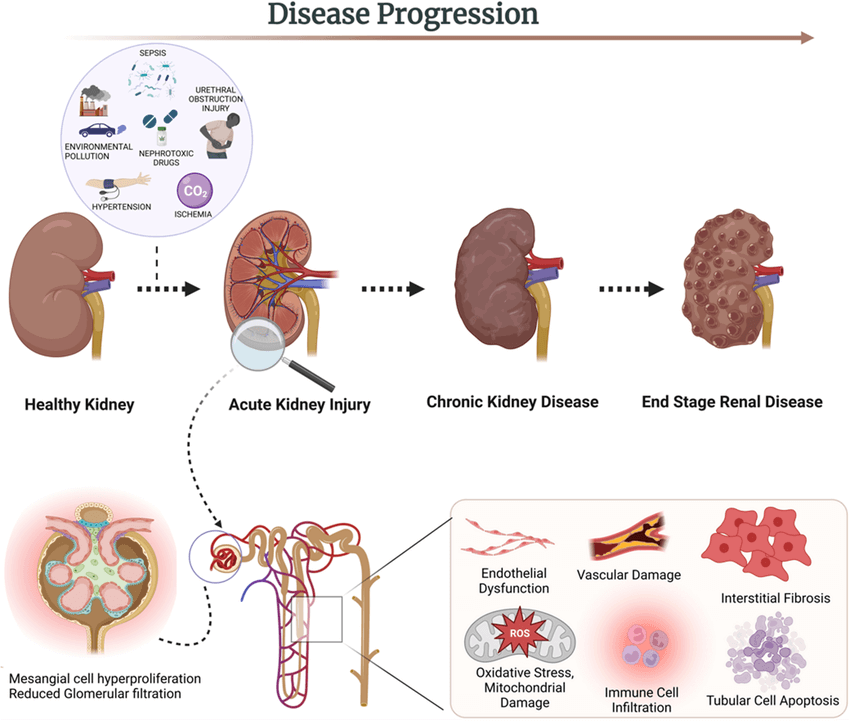
Chronic kidney disease (CKD) is a progressive condition where the kidneys gradually lose their ability to filter waste products from the blood. The development of CKD can be influenced by various factors, including underlying health conditions, lifestyle choices, and genetic predisposition. 

CKD increases the risk of additional health issues such as heart disease and stroke. The progression of CKD is typically gradual and often presents with minimal symptoms initially. To guide treatment decisions, CKD is categorized into five stages based on its severity.

Be cautious if you experience either of these common causes of CKD.

Diabetes

High blood sugar levels can damage the small blood vessels and filters in the kidneys, leading to kidney disease.

High blood pressure

Uncontrolled high blood pressure can put strain on the kidneys, causing damage over time

Other possible causes include:

  • Glomerulonephritis (inflammation of the kidney’s filtering units).
  • Polycystic kidney disease (an inherited disorder that causes cysts to grow in the kidneys).
  • Repeated kidney infections or urinary tract infections.
  • Kidney stones or blockages in the urinary tract.
  • Extended use of certain medications

Protect Your Kidneys, Protect Your Life

Your kidneys work hard for you every day. Give them the care they deserve by knowing your eGFR

eGFR stands for estimated Glomerular Filtration Rate. eGFR is calculated from blood test results using a formula that looks at the level of creatinine (a waste product) in your blood. Results consistently below 60mL/min/1.73m2 indicate chronic kidney disease. eGFR can also be calculated by using the eGFR calculator below.

eGFR Calculator with Severity Table

Estimated Glomerular Filtration Rate (eGFR) Calculator

eGFR: -- mL/min/1.73m²

CKD Stage eGFR Range (mL/min/1.73m²) Description
Stage 1 ≥ 90 Normal or high eGFR
Stage 2 60 - 89 Mildly decreased eGFR
Stage 3 30 - 59 Moderately decreased eGFR
Stage 4 15 - 29 Severely decreased eGFR
Stage 5 < 15 Kidney failure

Note: This calculator uses the CKD-EPI formula for eGFR estimation. The results should be interpreted by a healthcare professional.

Seek advice from our expert if you suffers any of these symptoms.

Itchy and Dry Skin

More or less Often Urinating

Nausea & Fatigue

Loss of Appetite

Weight Loss Significantly

Foamy Urine
Managing CKD with Our Stem Cell Therapy

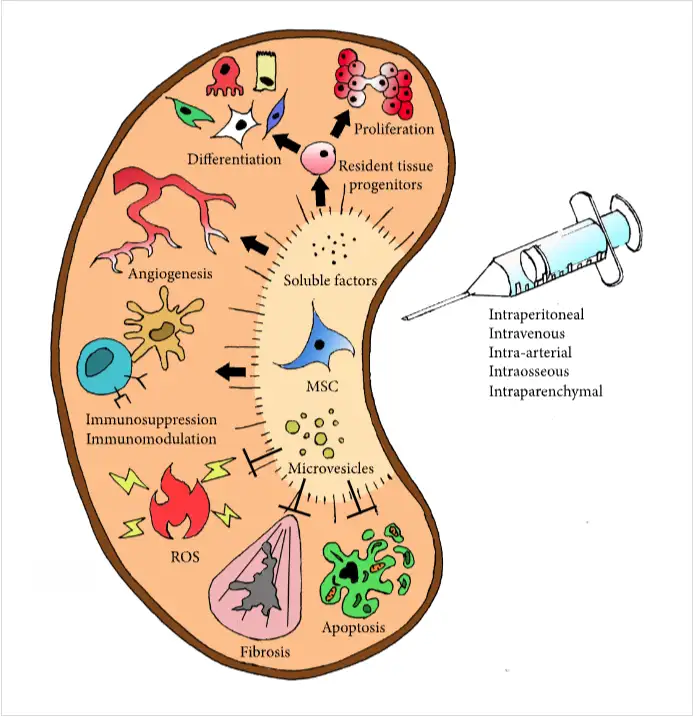
Chronic kidney disease (CKD) is a significant global health issue, and traditional treatments often fail to reverse its progression. Recent advances in stem cell therapy, particularly using mesenchymal stem cells (MSCs), have shown promise in treating CKD through various mechanisms.

How stem cell therapy may be your options?

Paracrine Effects

MSCs primarily exert their therapeutic effects through paracrine signaling. They release a variety of bioactive factors, including cytokines, growth factors, and extracellular vesicles, which help modulate the immune response, reduce inflammation, and promote tissue repair. This paracrine activity is crucial in protecting renal cells from apoptosis and reducing oxidative stress, which are common in CKD.

Immunomodulation

MSCs possess strong immunomodulatory properties. They can alter the local immune environment, reducing the activation of pro-inflammatory pathways. This helps in decreasing the inflammatory damage to renal tissues, which is a significant factor in the progression of CKD.

Anti-fibrotic Effects

In CKD, fibrosis is a major contributor to kidney dysfunction. MSCs can inhibit the processes that lead to fibrosis, thereby preserving kidney structure and function. They achieve this by modulating the activity of fibroblasts and reducing the deposition of extracellular matrix components.

Regeneration and Repair

MSCs have the ability to differentiate into various cell types, including renal tubular cells. This differentiation can contribute to the repair of damaged kidney tissues. Moreover, they can stimulate the proliferation of resident renal cells, enhancing the regeneration of renal structures.

Oxidative Stress Reduction

Oxidative stress plays a critical role in kidney injury. MSCs help mitigate oxidative stress by enhancing the antioxidant defenses in renal cells, thereby protecting them from damage and promoting survival.

Case Studies and Clinical Evidence

"55 Years-Old | Male Patient"Case studies
A 55-year-old male patient diagnosed with stage 3 chronic kidney disease and a medical history including diabetes and hypertension, conventional treatments such as angiotensin-converting enzyme inhibitors and diuretics had been previously administered for blood pressure and kidney function management. Due to inadequate response and progressive decline in kidney function, the patient underwent autologous mesenchymal stem cell therapy, receiving a total of three intravenous injections spaced one month apart. Monitoring of kidney function using serum creatinine levels and estimated glomerular filtration rate (eGFR) revealed a notable 20% increase in eGFR and a significant reduction in proteinuria six months post-treatment. Subsequent follow-up over a 2-year period showed sustained improvement in kidney function without the need for dialysis, suggesting the potential efficacy of mesenchymal stem cell therapy in improving renal outcomes and warranting further investigation into its clinical utility in chronic kidney disease management.
"65 Years Old" | Female PatientCase studies
A 65-year-old female patient with stage 4 chronic kidney disease secondary to polycystic kidney disease (PKD), who had been managed with conservative measures and hemodialysis for 2 years, autologous adipose-derived mesenchymal stem cell therapy was initiated. The patient received two rounds of stem cell injections, with each round consisting of three intravenous infusions administered monthly. Monitoring of renal function using serum creatinine levels, urine protein excretion, and renal ultrasound imaging revealed a gradual improvement in kidney function markers, including a 30% increase in estimated glomerular filtration rate (eGFR) and a reduction in proteinuria by 50% after 6 months of stem cell therapy. Follow-up assessments at 12 months showed sustained improvements in eGFR and kidney structure, with a decrease in the frequency of hemodialysis sessions from thrice weekly to twice weekly. Additionally, the patient reported subjective improvements in symptoms such as fatigue and fluid retention. This case highlights the potential of adipose-derived mesenchymal stem cell therapy in ameliorating renal function and quality of life in patients with advanced chronic kidney disease due to PKD, supporting further investigation into the role of stem cell interventions in this patient population.
FAQ About Stem Cell Treatments for CKD
Stem cell therapy involves using stem cells, particularly mesenchymal stem cells (MSCs), to repair and regenerate damaged kidney tissues. This therapy can potentially slow the progression of CKD and improve renal function by reducing inflammation and promoting tissue repair.
 
While early studies and clinical trials show promise, stem cell therapy for CKD is still considered experimental. Safety varies depending on the source of stem cells and the specific protocols used. Patients should discuss potential risks and benefits with our professionals.
Potential benefits include improved kidney function, reduced symptoms of kidney disease, decreased need for dialysis, and enhanced quality of life. Stem cells may also help reduce fibrosis and inflammation in the kidneys.
 
Currently, there are no FDA-approved stem cell therapies specifically for CKD. However, numerous clinical trials are ongoing to evaluate the safety and efficacy of these treatments.
The timeline for seeing results can vary significantly among individuals. Some patients may notice improvements within weeks, while others may take longer. Continuous monitoring by our healthcare professionals is essential to assess progress.
 
The treatment process typically involves the collection of stem cells (from sources like bone marrow or adipose tissue), followed by administration through injection or infusion. Patients may need to undergo pre-treatment evaluations and post-treatment follow-ups.
 
While stem cell therapy has the potential to improve kidney function and reduce the need for dialysis, it is not yet a substitute for kidney transplantation. Patients should discuss all treatment options with our professionals to determine the best approach for your condition.
Any Enquiries? Schedule a Free Consultation Today